Book of Astronomy 1st Edition: Introduction
$4.99
This downloadable PDF is the Introduction to the 1st Edition of the Book of Astronomy (65 slides).
You may also like…
Persian Nativities III: On Solar Revolutions
This third volume of the Persian Nativities series is a translation of the surviving Latin version of Abu Ma’shar’s On the Revolutions of the Years of Nativities. It covers all of the primary predictive techniques: profections, solar revolutions, distributions, transits, and firdaria.
Workshop: Elements of Solar Revolutions
This 2.5-hour workshop shows in great detail how to understand and combine several traditional techniques for analyzing a native's chart from year to year, using solar revolutions (solar returns), profections, and the direction of the Ascendant of the solar revolution. Length 2:34:55, 71MB.
Related Products

The Forty Chapters of al-Kindi
The famous, “first” Arab philosopher, al-Kindi (ca. 801-870 AD) wrote many instructional letters and works on astrology and the universe. The Forty Chapters is on horary and electional astrology: answering questions and choosing auspicious times to act. It is the second volume in the horary trilogy, preceded by The Search of the Heart and followed by The Book of the Nine Judges.
Bonatti on Lots
This volume is a detailed treatment of Parts or Lots, including the 7 Hermetic Lots, the Lots of the houses, using Lots in commodities speculation and political upheaval and regime changes. Over 100 Lots that cover all branches of astrology, drawing largely on Abu Ma’shar.

Works of Sahl & Masha’allah
Sahl bin Bishr (Zahel) and Masha’allah were two of the most influential medieval astrologers from the Arabic period. In a new work of 618 pages, Dr. Benjamin Dykes translates 16 of their most important works–many of them for the first time in any modern language! This essential work in medieval astrology includes many charts and lengthy introductory remarks and explanations by the translator.
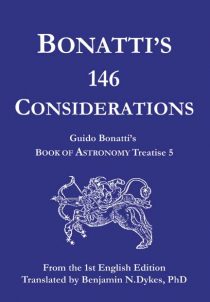
Bonatti’s 146 Considerations
The famous handbook of Considerations for judging charts retranslated. Coley’s paraphrased edition is superseded by this version, including key passages on the role of God and freedom in horary. (89 pp). Click here for a PDF excerpt.

Logos & Light 3: Plato
Volume 3 of the Logos & Light series presents the philosophy of Plato, which was so important to later philosophy and astronomy. Special emphasis is given to the Platonic Forms and how Platonism relates to traditional astrology and magic. See longer description below. Length: 13 hours, 383MB.
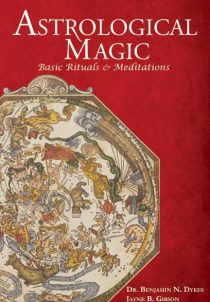
Astrological Magic: Basic Rituals & Meditations
Astrological Magic: Basic Rituals & Meditations is designed for both beginning and experienced ritualists. Written by two veteran ritualists with twenty years of experience apiece, it describes magic in terms of spiritual healing, and is especially written for contemporary astrologers (both traditionalists and modernists) who want a more hands-on, ritualized, and astrologically-based spirituality to complement their chart-reading practices.

Hermann of Carinthia: The Search of the Heart
“Every question of astronomy… is either in thought or in speech.”
In the 1140s AD, Hermann of Carinthia assembled instructions from medieval Arabic-speaking authorities on interpreting the unstated thoughts of clients (now called “consultation charts”), often using a “victor” or mubtazz or almuten for topics or the chart. Hermann also offered his own reflections on the proper balancing of dignities, house rank, and planetary strength.
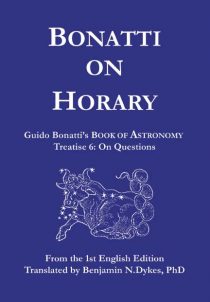
Bonatti on Horary
One of the most thorough treatments of horary, drawing especially on the medieval masters Sahl b. Bishr and Masha’allah. Surprising predictive techniques combine elections, solar revolutions, and horary charts. Includes two charts from Bonatti’s own career. Learn whether your horse will win the race, your husband is cheating on you, or the king will fall from grace (278 pp)! Click here for a PDF excerpt.