
FAA 2010 Interview: Translating the Tradition
$4.99
In this interview by Brian Clark, Dr. Dykes explains a bit about his background, what is important about traditional astrology, and its future. Length 38:10, 17MB. $4.99
You may also like…
Workshop: Elements of Solar Revolutions
This 2.5-hour workshop shows in great detail how to understand and combine several traditional techniques for analyzing a native's chart from year to year, using solar revolutions (solar returns), profections, and the direction of the Ascendant of the solar revolution. Length 2:34:55, 71MB.
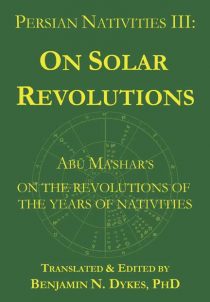
Persian Nativities III: On Solar Revolutions
This third volume of the Persian Nativities series is a translation of the surviving Latin version of Abu Ma’shar’s On the Revolutions of the Years of Nativities. It covers all of the primary predictive techniques: profections, solar revolutions, distributions, transits, and firdaria.
Related Products
AFA 2011 Traditional Astrology Conference
In September 2011, the oldest American astrological association, the American Federation of Astrologers, hosted a three-day traditional astrology conference. Held in honor of James Holden's research into and historic translations of traditional texts, Benjamin Dykes, Demetra George, and Chris Brennan gave extensive presentations on numerous traditional concepts and techniques. Running at 13 hours of audio (375 MB), this audio download contains MP3 recordings of the proceedings, plus many PDF slides and study aids. See list of lectures below.
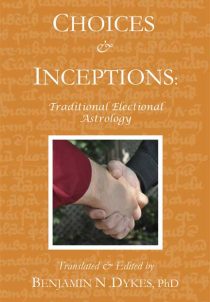
Choices & Inceptions: Traditional Electional Astrology
Medieval electional astrology in the tradition of Dorotheus
Choices & Inceptions presents numerous works on choosing auspicious times for actions, drawn from the most well-known medieval Persian and Arabic-language authors and compilers: al-Kindi, Sahl bin Bishr, Bethen, al-‘Imrani (Haly Embrany), and al-Rijal (Haly Abenragel). It is the largest collection of traditional electional texts available in modern languages.
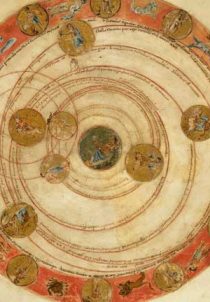
Introduction to Traditional Mundane Part 1
This presentation introduces traditional mundane astrology, beginning with Ptolemy’s method for interpreting and timing eclipses, prices and weather, and historical astrology: framing history into larger and smaller periods, especially using Saturn-Jupiter conjunctions. Length 1:16:09, 36MB.
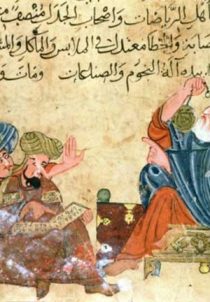
FAA 2010 Lecture: Introduction to Solar Revolutions
This short lecture introduces several solar revolution techniques, part of the Persian suite of annual predictive techniques: profections, the solar revolution chart, and transits. Length 1:08:57, 31MB.
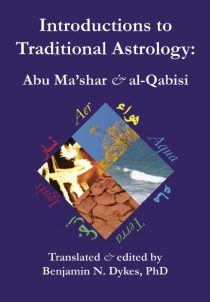
Introductions to Traditional Astrology: Abu Ma’shar & al-Qabisi
Introductions to Traditional Astrology (ITA) is a joint translation of two classic introductory works: Abu Ma’shar’s Abbreviation of the Introduction to Astrology, and al-Qabisi’s Introduction to Astrology. It also includes numerous passages from Abu Ma’shar’s Great Introduction (never before published in English) and other medieval astrologers on interpretating traditional concepts. (425 pages)
Victors, Almutens, and the Holy Guardian Angel
This audio download explains the concept of victors or “almutens” in traditional astrology: how to calculate and understand several types, and how to use Renaissance methods to determine the planetary category and name of one’s personal Angel or Higher Genius. See longer description below. Contains: MP3 and slides. (Length: 2:53:00, 83MB.)
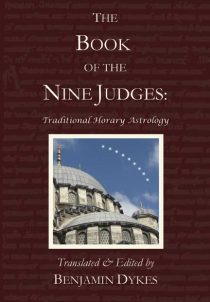
The Book of the Nine Judges
The great medieval compendium of Persian and Arabic masters
The Book of the Nine Judges is the largest traditional compilation of horary astrology, drawn from nine Persian and Arabic astrologers. Translated from Arabic sources chiefly by the 12th-Century Latin translator Hugo of Santalla, it achieved legendary status but has never before been translated into any modern language. It includes material by Masha’allah, ‘Umar al-Tabari, Abu Ma’shar, Sahl bin Bishr, al-Kindi, Abu ‘Ali al-Khayyat, “Dorotheus,” “Aristotle,” and Jirjis. Click here for a PDF excerpt.
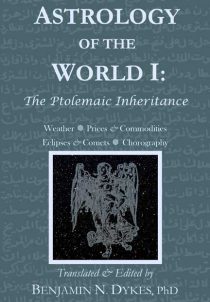
Astrology of the World I: The Ptolemaic Inheritance
Astrology of the World I: The Ptolemaic Inheritance presents numerous selections by Arabic and Latin authors on areas of mundane astrology inspired by Ptolemy’s Tetrabiblos. Many texts have been translated directly from Arabic by Benjamin Dykes. Authors include al-Kindi, ‘Umar al-Tabari, al-Rijal, Masha’allah, Abu Ma’shar, ibn Labban, Dorotheus, and ibn Ezra.