
FAA 2010 Lecture: Introduction to Solar Revolutions
$14.99
This short lecture introduces several solar revolution techniques, part of the Persian suite of annual predictive techniques: profections, the solar revolution chart, and transits. Length 1:08:57, 31MB.
You may also like…
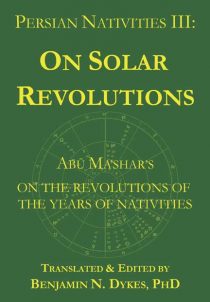
Persian Nativities III: On Solar Revolutions
This third volume of the Persian Nativities series is a translation of the surviving Latin version of Abu Ma’shar’s On the Revolutions of the Years of Nativities. It covers all of the primary predictive techniques: profections, solar revolutions, distributions, transits, and firdaria.
Workshop: Elements of Solar Revolutions
This 2.5-hour workshop shows in great detail how to understand and combine several traditional techniques for analyzing a native's chart from year to year, using solar revolutions (solar returns), profections, and the direction of the Ascendant of the solar revolution. Length 2:34:55, 71MB.
Related Products
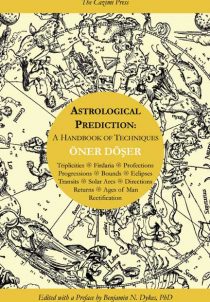
Astrological Prediction: A Handbook of Techniques
This new work by popular Turkish astrologer Öner Döşer embodies an important new trend in astrology: the harmonizing of traditional and modern techniques for contemporary astrologers. The traditional techniques here include: Ptolemy’s Ages of Man, triplicity periods, distributions or directions through the bounds, primary directions, profections, and firdaria. Contemporary techniques include secondary progressions, solar arcs, and transits. Click here for a PDF excerpt.
Introduction to Traditional Mundane Part 1
This presentation introduces traditional mundane astrology, beginning with Ptolemy’s method for interpreting and timing eclipses, prices and weather, and historical astrology: framing history into larger and smaller periods, especially using Saturn-Jupiter conjunctions. Length 1:16:09, 36MB.

The Book of the Nine Judges
The great medieval compendium of Persian and Arabic masters
The Book of the Nine Judges is the largest traditional compilation of horary astrology, drawn from nine Persian and Arabic astrologers. Translated from Arabic sources chiefly by the 12th-Century Latin translator Hugo of Santalla, it achieved legendary status but has never before been translated into any modern language. It includes material by Masha’allah, ‘Umar al-Tabari, Abu Ma’shar, Sahl bin Bishr, al-Kindi, Abu ‘Ali al-Khayyat, “Dorotheus,” “Aristotle,” and Jirjis. Click here for a PDF excerpt.
Two Special Configurations: Aversion and Decimation
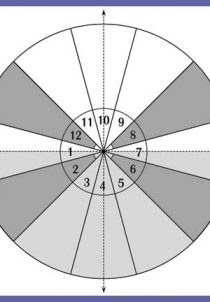
This downloadable audio lecture describes two important configurations in traditional astrology, illustrating them with chart examples. See longer description below. Contains MP3 audio, slides, and a handout. (Length: 1:12:00, 33MB.)

Eminence and Status in Traditional Astrology
This lecture describes numerous traditional techniques for evaluating eminence and status in a natal chart. All of the techniques are applied to two charts of famous individuals, Michael Jackson and Bill Gates. Length 2:33:00, 70MB.
AFA 2011 Traditional Astrology Conference
In September 2011, the oldest American astrological association, the American Federation of Astrologers, hosted a three-day traditional astrology conference. Held in honor of James Holden's research into and historic translations of traditional texts, Benjamin Dykes, Demetra George, and Chris Brennan gave extensive presentations on numerous traditional concepts and techniques. Running at 13 hours of audio (375 MB), this audio download contains MP3 recordings of the proceedings, plus many PDF slides and study aids. See list of lectures below.

Saturn in Traditional Mundane Astrology
This special lecture for RubiCon Astrology looks at the role of Saturn in traditional mundane astrology, beginning with Abu Ma’shar’s planetary hierarchy and Saturn’s role as the king and lawgiver, then moving to Saturn-Jupiter mean conjunctions, transits of and/or to Saturn, and Saturn-Mars conjunctions in Cancer. Approx. 1 hour, with audio and slides. $20

FAA 2010 Interview: Translating the Tradition
In this interview by Brian Clark, Dr. Dykes explains a bit about his background, what is important about traditional astrology, and its future. Length 38:10, 17MB. $4.99